Your users can now go places you never built
AI changes two things in software: how we build it, and how users use it. On the building side we see the non-determinism, evals, probabilistic testing, context engineering, etc. We learn a lot each day. But what about the product side? What might future software applications actually look like, how it’s going to be used, and what stays the same?
Pre-AI era
Let’s get concrete about building in the legacy(already? 😉) pre-AI era. Take a quotation system inside an ERP. Classic enterprise software. It has a bunch of personas, user flows, CRUD, admin and reports. We used to think hard about user flows and write code for each one explicitly.
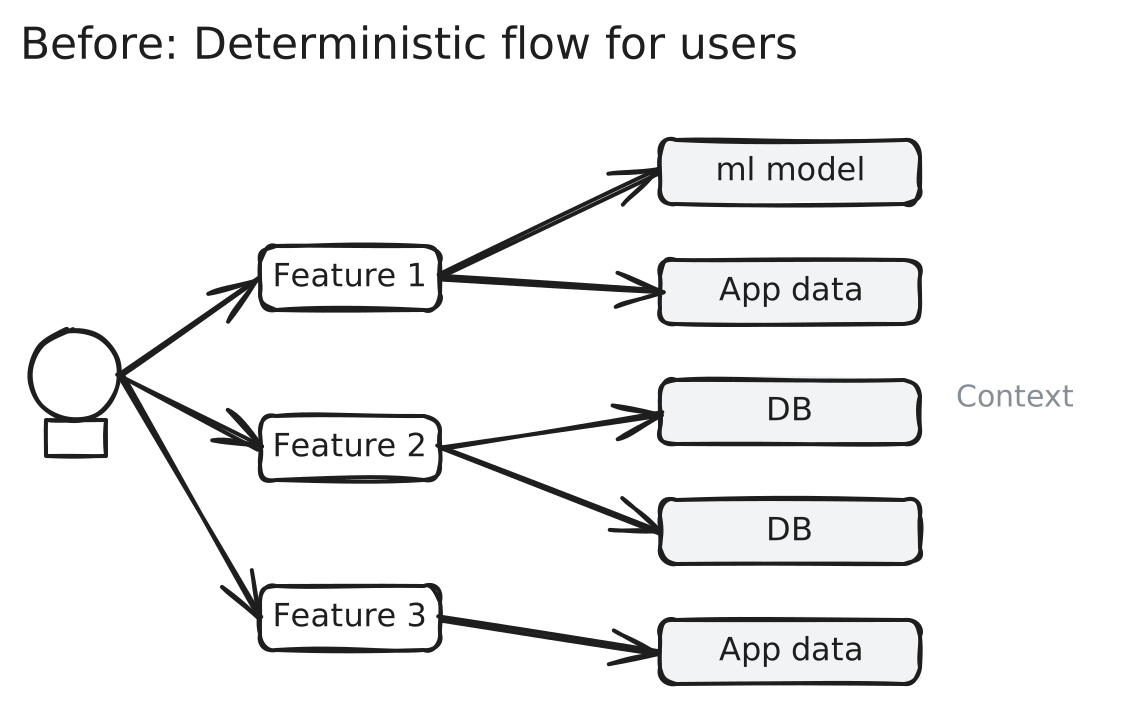
A sales rep creates a quote, a manager approves it, edits are allowed within limits, totals get recalculated. The forms are hand-filled. If we were generous, we’d build a “clone previous quote” button because that was the most common workflow.
Every feature was a deliberate decision. Someone wrote a spec, someone built it, someone tested it. Only flows that justified the cost got built. Long-tail use cases, niche workflows, one-off requests simply got deprioritized. They found no place in the product. Not because users didn’t need them, but because the economics didn’t support it.
The upside was predictability. You could reason about what the system would do. You could write tests. Every outcome was, in theory, knowable.
Now: The AI Era
Introduce an LLM and this flips.
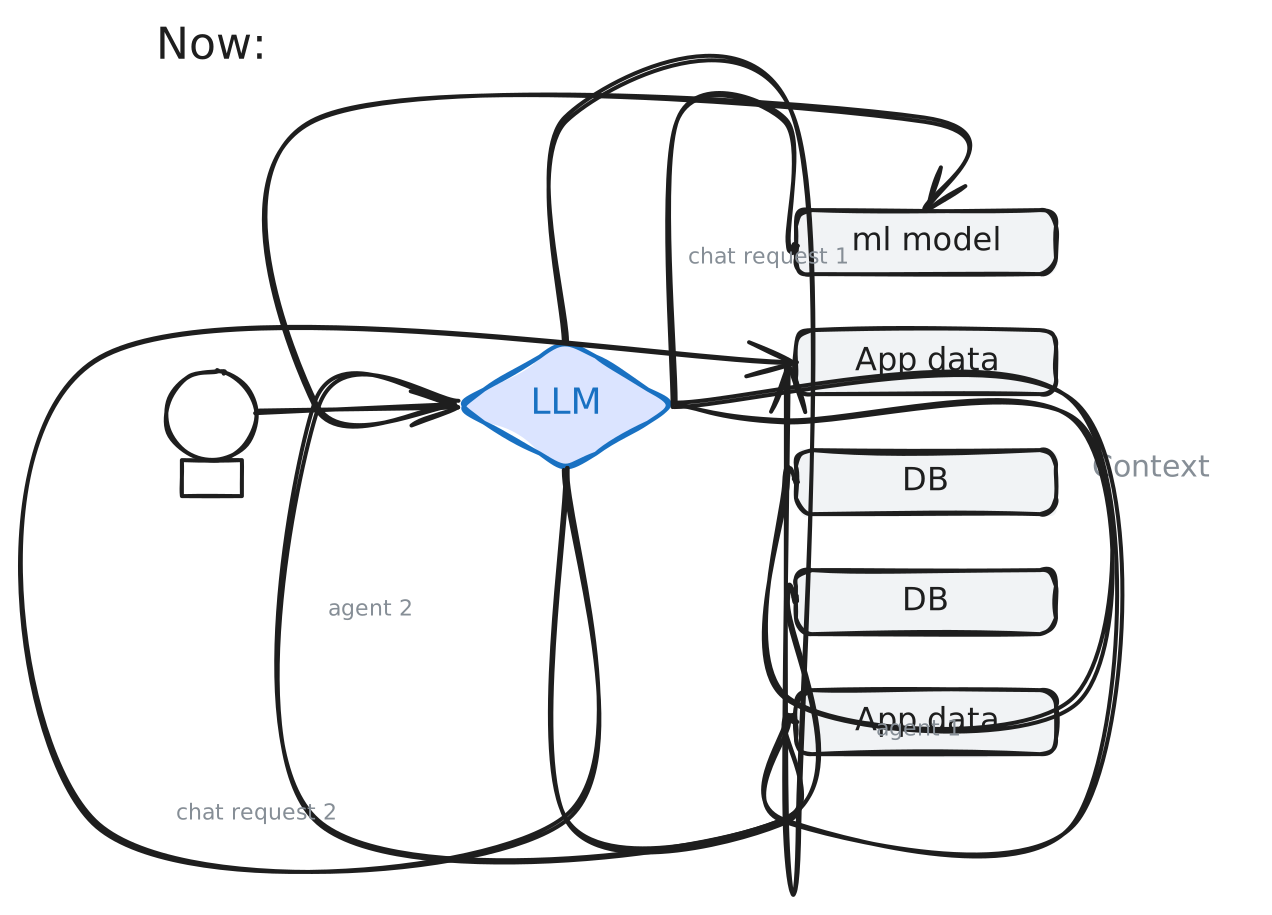
Take the same quotation system. A sales rep could now say: “Clone last month’s quote for Acme but update the quantities based on their new order,” or “Pull pricing from our latest rate card and adjust line items for the current USD/EUR exchange rate,” or “Draft a quote for the same products as Q3 but with the new discount structure.”
Each of these is a different workflow. None of them would have been worth building explicitly. All of them are now possible.
Software used to do what you built. Now it can do what users intend to.
What changes in products
| Before | Now |
|---|---|
| Define what users can do | Define what they cannot do |
| Build only what justifies the cost | Wire up tools, users reach the rest |
| Finite, enumerable outcomes | Infinite probable paths |
| Feature specs | Context engineering |
| Tests | Evals |
| Protect endpoints | Scope agents, prevent prompt injection |
Generative UI. The interface doesn’t have to be static anymore. Instead of navigating to a fixed screen, users describe what they want and the interface assembles itself around that task. The product surface becomes fluid rather than fixed. Google Research has an interesting take on this.
Copilots and agents. People want to automate the mundane parts of their work. The repetitive, rule-based, context-switching tasks that eat up half the day. AI makes that accessible without custom automation tooling. A user can now delegate a sequence of steps, not just a single query, and the agent handles the execution.
Guardrails and auditing as first-class design. When users and agents are both operating in your system, you need to know who did what and why. Tracing agent actions, building audit trails, making the system’s decisions legible. This is real product work that matters for enterprise adoption.
What doesn’t change
Not everything flips.
Consistency still matters. Users still want predictability for most of their work. Not everyone wants a blank chat interface with infinite possibility. People need to train their teams, standardize processes, build muscle memory around workflows. The demand for predictability isn’t going away. In fact, the more capable AI gets, the more important it becomes that the predictable paths stay predictable.
Not everyone wants to automate everything. Some tasks feel important to do manually. Some organizations aren’t ready for agentic workflows at all. COBOL and mainframes are still running production systems in 2026. The pace of adoption varies enormously and good software has to meet users where they are.
Humans are still accountable. You can automate, but accountability has to live somewhere and it can’t live with the model. That’s not changing regardless of how good the AI gets.
The craft of building software is shifting from designing what users can do to deciding what they cannot. It’s also a more interesting way to look at adding value to users. The joy of building something users love is not going anywhere. Happy building! 🎉